
The Equiano Family Project
The Equiano Family Project at St Andrew’s Church is an arts, education and cultural initiative designed to promote awareness & reflection on the Equiano family story in the Chesterton community.
The Equiano Family Window
At the heart of the Equiano Family Project is an idea for commissioning a new stained-glass window in St Andrew’s Church. After a rigorous appointment process – including artist interviews and a community survey – the church council of St Andrew’s Chesterton has awarded the commission for designing the Equiano Family Window to Selena Scott.
Selena Scott is a young visual artist born and raised in Girton, Cambridge. Graduate of the Slade School of Fine Art, UCL (2022), is a founding member of Cambridge Black Creatives. After further conversations with the Equiano Family Project Committee, Selena has produced a revised design and explanation for the window which you can see here.
The project has several more stages to reach before the window can be made a
reality:
- we need to secure Faculty and Planning permissions for the new window;
- a stained-glass workshop needs to help translate Selena’s rich design into the medium of glass;
- we also need help from as many people as possible to raise the necessary funds for the window.
Giving to the Equiano Family Project
You can give now to the Equiano Family Project at St Andrew’s Chesterton. Any gift now will be supporting the use of the arts for awareness and reflection on the Equiano family story in the Chesterton community, including the stained-glass window project.
There are four ways to give to the project:
- On our website, go to Giving to the Equiano Family Project page and select the donate button.
- In church, on the contactless machine at the back, simply choose Equiano Family Project Fund on the opening screen, and choose you amount.
- You can set up a bank transfer to the St Andrew’s Church charity account (please label your gift Equiano Family Project in the payment reference space provided):
Account name: Chesterton St Andrews PCC (exactly as written)
Account number: 80263524
Sort code: 20-17-35 - You can write a cheque to Chesterton St Andrews PCC (exactly as written), and send to St Andrew’s Church Office, St Andrew’s Hall, St Andrew’s Road Chesterton, Cambridge, CB4 1DH. Please mark your envelope: Equiano Family Project.
More about the Equiano Family Project
Olaudah Equiano (1745-1797) was a celebrated author and campaigner against the transatlantic trade of enslaved human beings in 18th-century England. Equiano’s autobiography The interesting narrative of the life of Olaudah Equiano or Gustavus Vassa the African written by himself (1789) contributed substantially to changing perspectives on the slave trade in British society. For more history, visit our Olaudah Equiano page.
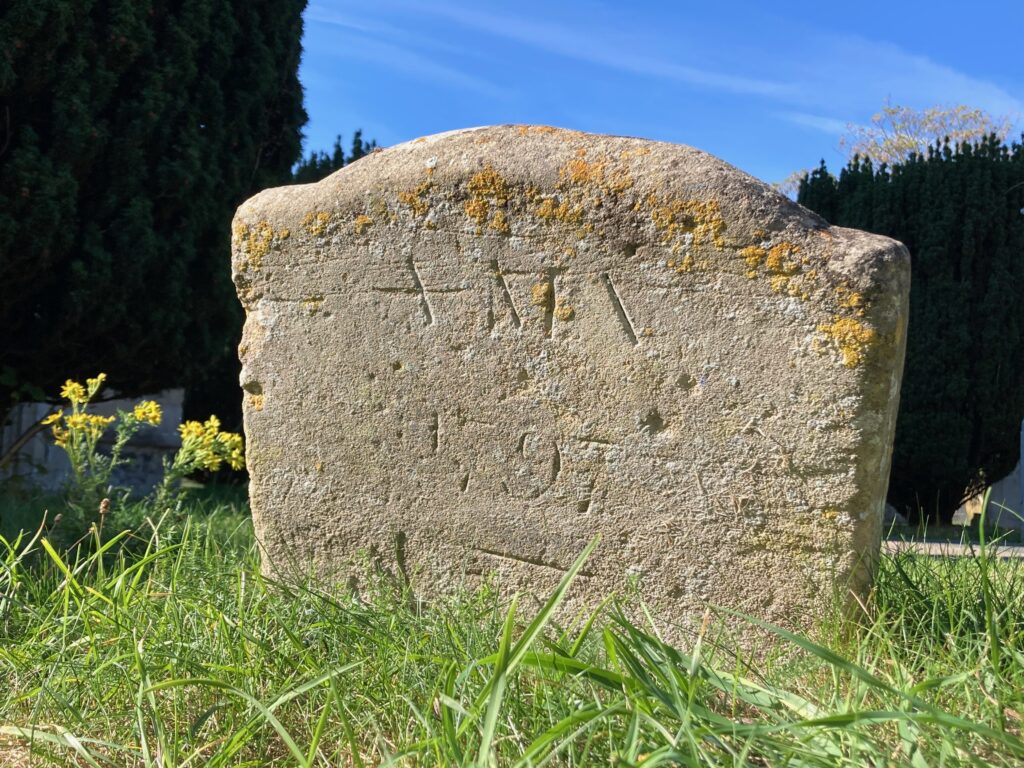
Equiano’s wife, Susanna Cullen, was from Cambridgeshire. The couple had two daughters, Anna Maria and Joanna. It is believed the children lived in Chesterton after the death of their parents, and were brought to worship at St Andrew’s Church. Anna Maria died young and is buried in St Andrew’s churchyard. The exact location of her grave was rediscovered in 2025, close to the memorial plaque on the North Wall of St Andrew’s Church.
The Equiano connection with Chesterton has gained growing attention and acknowledgement in recent years. Chesterton Community College has renamed one of its school ‘houses’ Equiano House. A successful community campaign led to the white ‘Tesco’ bridge being renamed the ‘Equiano Bridge’ in 2022. An increasing number of visitors to St Andrew’s Church and churchyard express their interest in the plaque outside and learning more of the story it tells.
At St Andrew’s Church, we believe there is so much in the Equiano family story to inspire thought, reflection and discussion in our community. Over two hundred years ago, two young girls of African and English heritage lived in Chesterton and were made welcome. When Anna Maria died, the poem on her memorial plaque tells us: ‘To bury her the village children came. And dropp’d choice flowers, and lisp’d her early fame;’. The story of these girls and their family is a hopeful story of faith confronting injustice. It is a challenging story reminding us of horrifying wrongs in our history. It is a story involving tragedy and loss, but also courage and triumph in the face of adversity. The story of Olaudah, Susannah, Anna Maria & Joanna further speaks of companionship and familial bonds bridging cultures – a lived experience many want to recognise and celebrate in our society today.
At the heart of the Equiano Family Project is a new stained-glass window in St Andrew’s Church. A window would have the potential to commemorate the Equiano family and seek to express through visual art a range of themes inspired by their story: Christian faith, lamented history, the bonds of family, English and African heritages and more. St Andrew’s has not had a new stained-glass window for over a century. Any new window will need to be of sufficient artistic merit to complement the importance of the subject. It should also be a significant enhancement to the worship space, enriching the experience of this Grade 1-listed building for all who visit and enjoy it as a place of beauty, peace, prayer and worship. There is also a nice coincidence of a window celebrating a family being above the area our young families like to gather for worship in church today.
If you would like to learn more about the Equiano Family Project, do sign up to our mailing list to receive updates on project initiatives. email: admin@standrews-chesterton.org
For up-coming events linked to the Equiano Family Project, see St Andrew’s News
Anna Maria Vassa – The rediscovery of Anna Maria’s grave
The final resting place of Anna Maria – the elder daughter of Olaudah Equiano – has now been confirmed in the St Andrew’s churchyard. The words on the memorial plaque to Anna Maria on the north wall of the church always indicated that she ‘lies beside this humble stone’. However, the precise location of her grave was not confirmed until October 2025.
Professor Victoria Avery (Keeper of European Sculpture and Decorative Arts at the Fitzwilliam Museum, and Co-Curator of Black Atlantic and Lead Curator of Rise Up) and Dawnanna Kreeger (independent researcher) have undertaken extensive research into Equiano’s Cambridgeshire Family. As part of their ongoing work, Avery recently came across a long-forgotten A-level history project written nearly 50 years ago by a teenage pupil, Cathy O’Neill, of St Mary’s School, Cambridge. O’Neill had visited St Andrew’s in the 1970s and taken a photograph of a grave marker she speculated might be Anna Maria’s. It was assumed that the marker had been subsequently removed with changes to the churchyard path. However, with the help of Philip Lockley, they managed to re-locate the stone illustrated in O’Neill’s 1977 photo, and correctly decipher its very worn inscription. Its small scale and brief inscription confirm it to be the original footstone (rather than headstone). The stone marks a grave exactly in-line with the memorial plaque to the north of the church – so very much hidden in plain sight. The proposed new stained-glass window commemorating the Equiano will also be located parallel to the grave.
Banner image: Collisions Theatre Production of “Breaking the Silence of the British Slave Trade,” St Andrew’s Chesterton, June 2024, Paul Ashley Photography.